
The framework
Part 2 explains how SPF works: four principles, four human performance capabilities and a nine-step analysis method.
Four principles, with game understanding at the centre
The framework rests on four pieces of football logic.
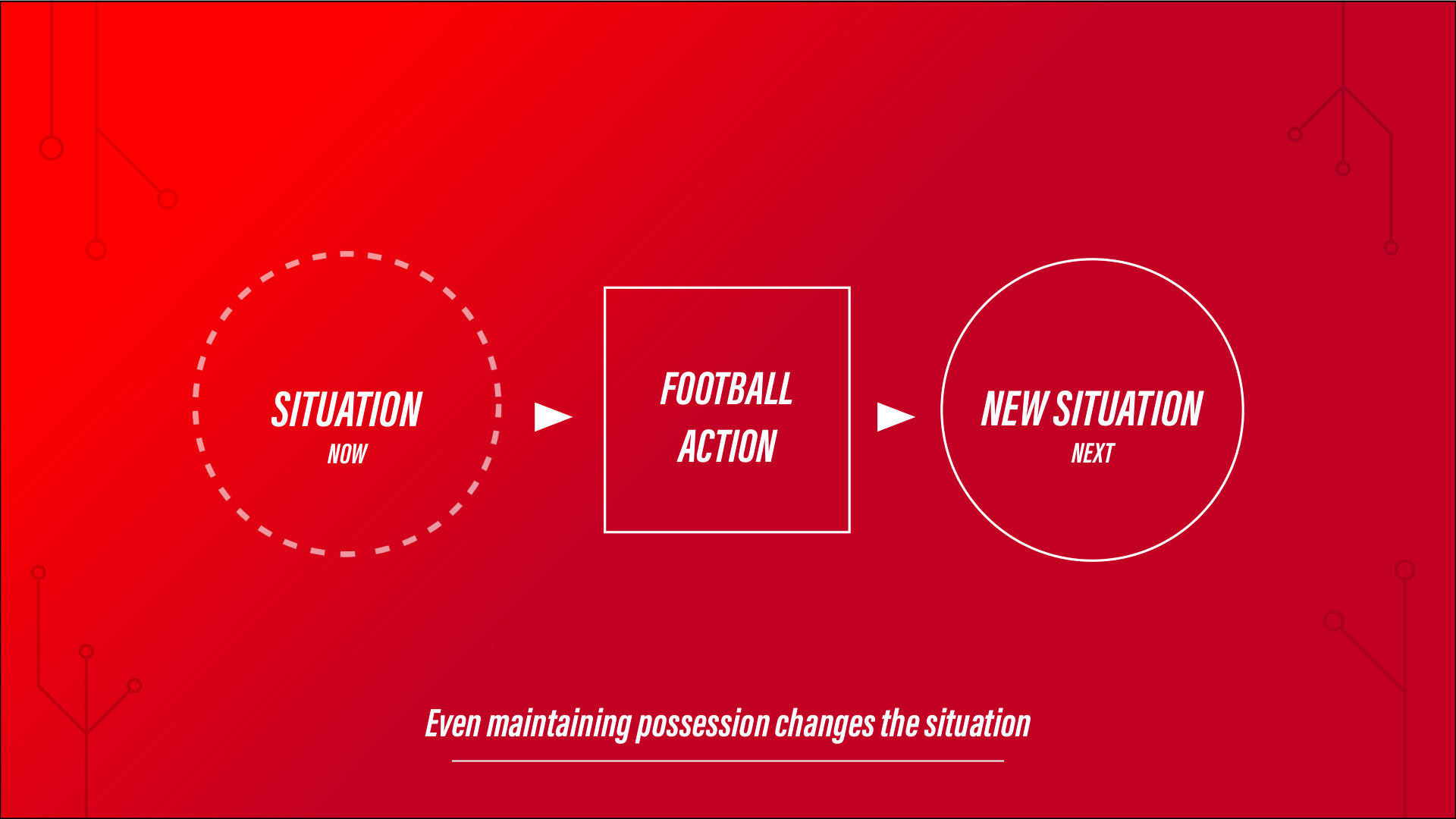
Every Football Action creates a new Football Situation.
Even maintaining possession changes time, pressure, orientation, positions or available options.
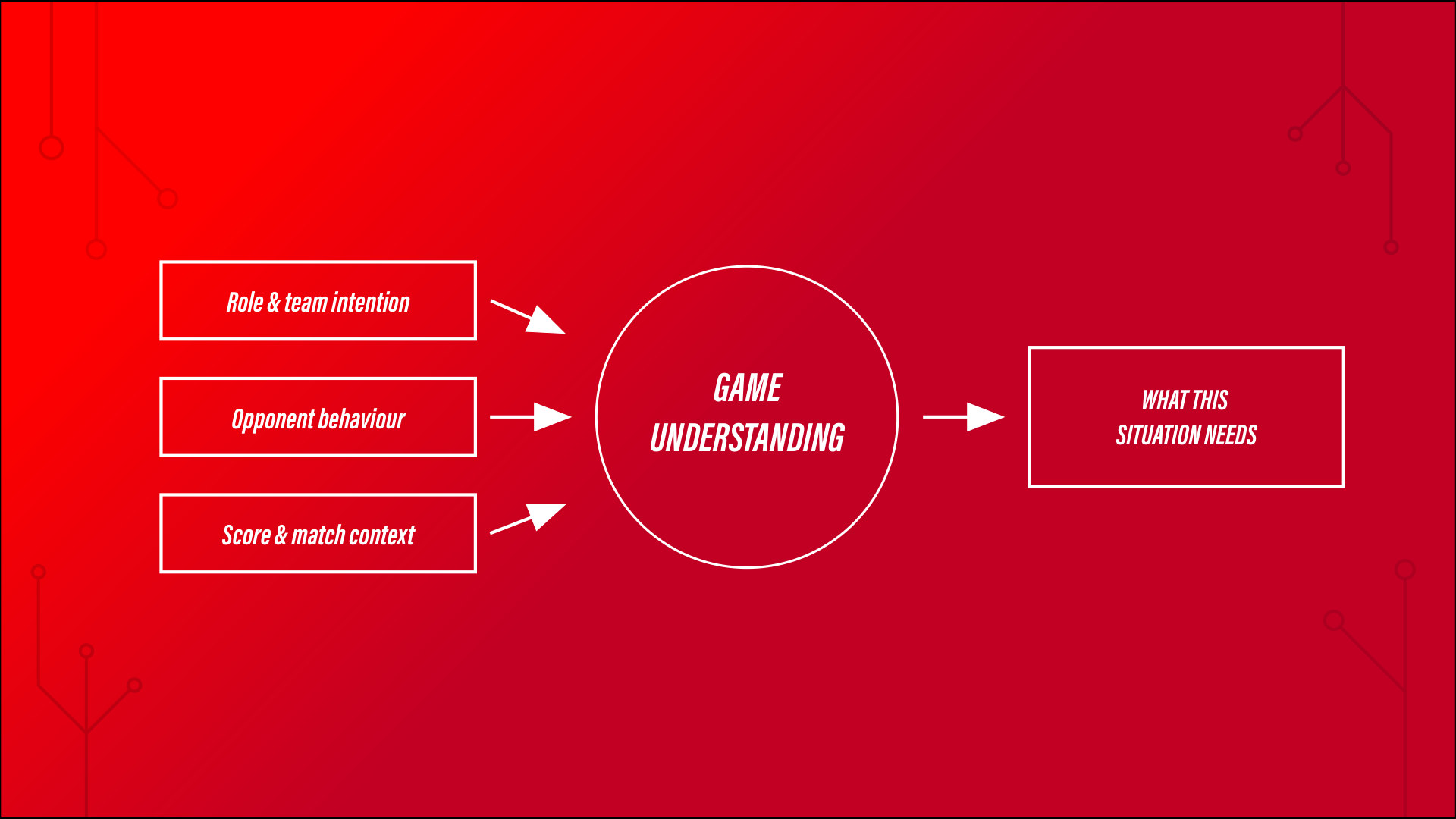
Game Understanding guides interpretation.
Players respond through their understanding of role, opponent, score and team intention.
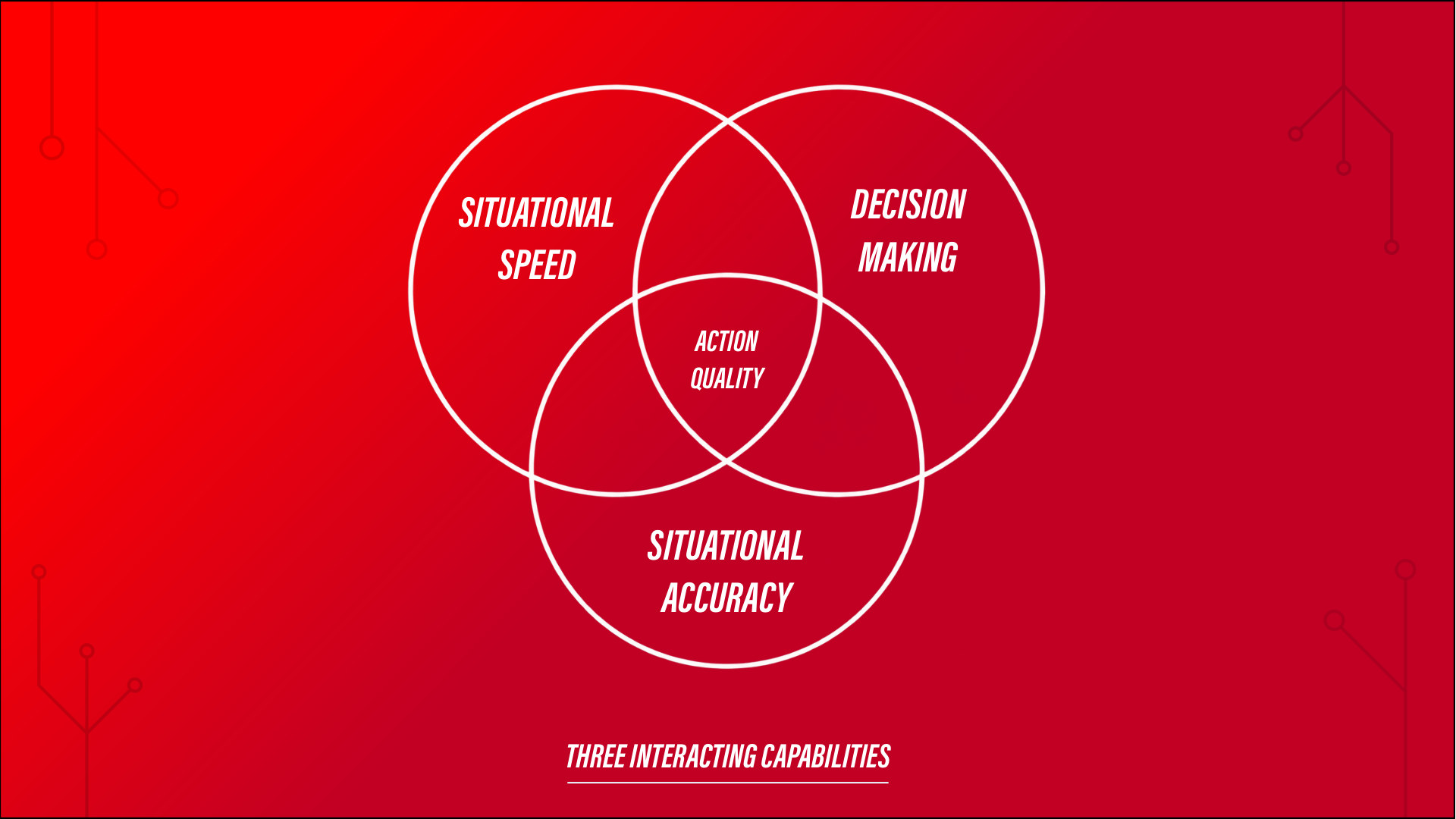
Football Action Quality depends on three interacting capabilities.
Situational Speed, Decision Making and Situational Accuracy shape how the situation is solved.
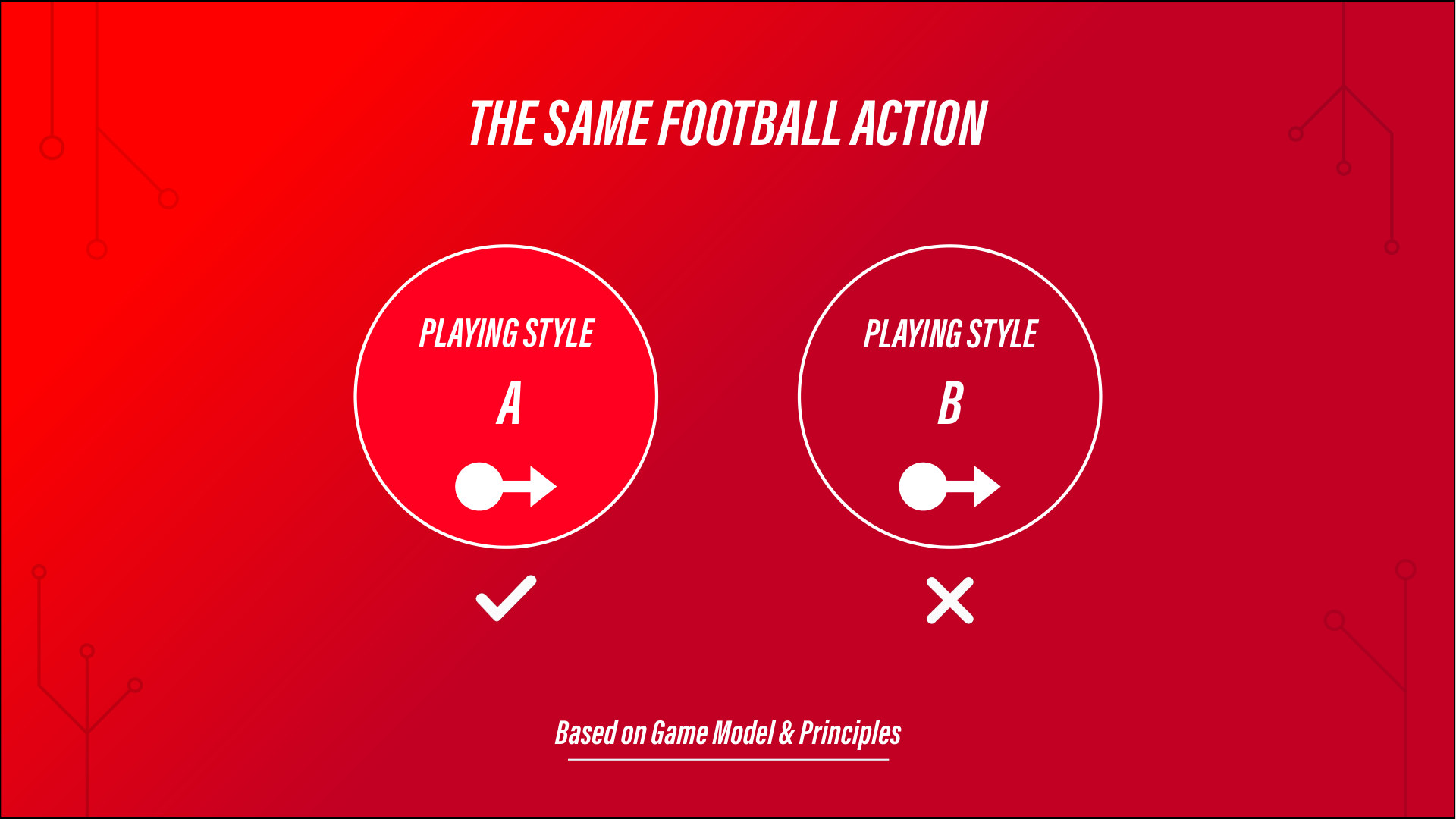
Evaluation is always relative to the team’s football.
The Game Model, Playing Style and Playing Principles define what is desirable in context.
The Action-Situation Cycle
Football Situation → Football Action → Next Football Situation
A match is an ongoing loop: each Football Action changes the context for what happens next. The Football Action in the middle is the object of analysis. The loop is the continuous relationship between Football Actions and Football Situations. The Playing Style and Playing Principles decide whether the next situation is desirable.
A repeatable learning unit for coaches:
- What was the situation?
- What did our football require?
- What did the player choose and execute?
- What did it create next?
There is no context-free “best” Football Action. The same pass, press or run can be right for one Playing Style and wrong for another.
Four Human Performance Capabilities
Game Understanding gives direction; three interacting capabilities shape the quality of the Football Action.
Game Understanding (GA)
The guiding capability: what does this Football Situation require from us, and from me?
- Role and team intention
- Opponent behaviour and match context
- The relevant Playing Principle
Situational Speed (SiS)
Every form of speed that contributes to solving the Football Situation.
- Recognition, anticipation and processing
- Physical movement and transition speed
- Ball-handling speed, circulation and tempo adaptation
Decision Making (DM)
The selection of an action from the available or perceived options.
- Pass, dribble, shoot, hold, sprint, press, cover or delay
- Risk relative to the team’s intention
- Choice under pressure, fatigue and changing context
Situational Accuracy (SiA)
The precision with which the player perceives, positions, times and executes.
- Positioning, body orientation and timing
- Direction, weight, speed and curve of a pass
- Precision of a press, duel, cover action or first touch
Analysis methodology, built on game understanding
Nine steps: from your team’s football to coachable insight. Each step asks what the player should see, and what the team wants in this moment. That keeps the analysis close to the training pitch. As a result, coaches and players can use the feedback straight away.
- Define the Game Model, Playing Style and relevant Playing Principle.
- Select a recurring or strategically important Football Situation.
- Describe the situational conditions: ball, space, time, pressure, phase, score and opponent behaviour.
- State the required Game Understanding in coach-friendly language.
- Identify the Football Actions, including off-ball contributions and relevant non-actions.
- Review Situational Speed, Decision Making and Situational Accuracy.
- Assess the next Football Situation created.
- Aggregate comparable Football Situations and identify recurring patterns.
- Translate the insight into feedback, training design and follow-up measurement.
Try it on one of your own matches.
Follow new SPF versions and pilot updates on Forward Football on LinkedIn.